Neil Sedaka
At the end of last week, another of the big names of pop passed on - a man who has written, sung on or played piano with and on, many of the great acts and popular pop tunes of the last sixty-five years. So, this time as we find a way via our Six(ish) Degrees towards shoegaze king Kevin Shields - we start off with our tribute to Neil Sedaka.
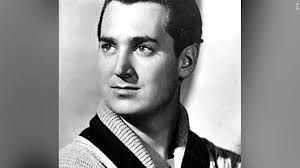
Neil Sedaka was born in Brooklyn in 1939, with Lebanese Jewish paternal grandparents who had arrived from Istanbul in 1910, and maternal heritage that were Ashkenazi Jews from Poland and Russia. By 1947 he was attending Julliard School of Music on Saturdays, because of his piano prowess.
Then, to his mother's dismay, he discovered pop music (she wanted him to be a classical musician) . He started writing in the famous Brill Building (on Broadway), partnering with his neighbour's son, an aspiring poet and lyricist, Howard Greenfield. He got his first solo hit in 1959, when Oh! Carol hit number nine in the US and the top spot in the UK - it turns out that he had dated Carole King at High School (her husband, Gerry Goffin, amusingly then wrote one called Oh! Neil, which Sedaka then gamely recorded).
Neil Sedaka: Calendar Girl (tv appearance)
He went on to have hits with tunes like Calendar Girl, Happy Birthday Sweet 16 and Breakin' Up Is Hard To Do. He also wrote songs for the likes of ABBA, The Carpenters and Captain & Tennille. He died on Friday 27 February, aged 86.
***
The connection from here may not be one you were expecting.
Darby Crash was a notorious member of the burgeoning L.A. punk scene of the late 70s. He referred to Neil Sedaka as, "the real godfather of punk." This was quite a claim, but one he felt justified in because of Sedaka's use of simple chord progressions and unpretentious lyrics. He said that Calendar Girl "had all of punk right there - you just had to get high and dplay that pure rock & roll, just like that."

He was born John Beahm and lived in different parts of L.A. growing up, before attending (and being expelled from) a very interesting sounding high school (that seemed to incorporate elements of zen Buddhism and Scientology). That is where he met Georg Ruthenburg, with whom he would ultimately form the Germs. Inspired by The Stooges and The Ramones, and fuelled by LSD, they became known as Darby Crash (Beahm) and Pat Smear (Ruthenburg), and hooked up with Lorna Doom (Teresa Ryan) and Dottie Danger (Belinda Carlisle), who had to quit after two weeks because of illness, being replaced by Donna Rhia (Becky Barton).
Germs: Lexicon Devil (audio only)
Crash's lifestyle became increasingly centred around addiction, to alcohol and heroin. He blamed his drug taking on the need to avoid feeling the pain of the injuries he frequently got from fan violence (there was so much confrontation and violence, they were banned from many L.A. venues). There was a steady increase in his habit, until the band split. He headed briefly to the UK, where he was inspired by Adam & The Ants, returning to California to form the Darby Crash Band. It didn't last long - he died of an intentional overdose on 3 December 1980.
***
Darby Crash was one of many of the underground stars of that L.A. punk scene that were captured by up and coming filmmaker, Penelope Spheeris. The Decline of Western Civilisation was filmed in the clubs and squats of Los Angeles across 1979 and 1980, featuring the likes of Black Flag, Circle Jerks, X and of course, the Germs.
Spheeris was born in Louisiana, but after her father was tragically murdered for standing up for a black man, her mother moved them to California. They worked their way around various trailer parks and her mother remarried several more times. She went to California State - Long Beach to study art, and then University of California-Irvine to study psycho-biology. Then, she attended film school at UCLA.
Queen: Bohemian Rhapsody (Wayne's World version)

The film was finally released in 1981, sadly after Crash's demise. Spheeris would go on to make two more Decline films in the 1980s. She apparently declined the offer to direct This Is Spinal Tap (which went to the late Rob Reiner), but made her name with Wayne's World. She also directed several music videos, including two for metal giants, Megadeth.
***
Of the two videos Penelope Spheeris directed for Megadeth, one was for Wake Up Dead, and the other, No More Mr Nice Guy (1989).

No More Mr Nice Guy was a cover of a classic track by Alice Cooper, from 1973's Billion Dollar Babies. Slightly confusingly, Alice Cooper was both the band name, and the eventual adopted name of front man, Vincent Furnier. He certainly got used to it, and in 1975 he legally changed his name to Alice Cooper.
Alice Cooper: No More Mr Nice Guy (live in Birmingham, 1989)
Cooper would refer to much of the 1980's as his 'blackout' years, lost to the standard rock star cocktail of alcohol and cocaine. The first of his solo records recorded in this blackout period was Special Forces (1981), an album he largely consigned to the bin afterwards. Only one of its songs has been played live since the 1981-82 tour that followed its release. That was also the last tour he did for quite a while, as he struggled with these issues.
***
My musical hero, Stuart Adamson, had quit Dunfermline punks The Skids in 1981 and was ready to start a new project. After several early line ups, he and fellow guitarist Bruce Watson recruited the rhythm section of Mark Brzezicki and Tony Butler - and Big Country were properly up and running, going on to become one of the biggest Scottish bands of the 80's.
But before that, the early version of the band - Adamson, Watson, Clive Parker (drums), Pete Wishart (keyboards - later of Runrig, and later still an MP) and Alan Wishart (bass) - were invited onto that Special Forces tour with Alice Cooper. It was a strange combination of acts, and one that proved instantly disastrous. After just two shows in February 1982, at Brighton and Birmingham, Big Country were swiftly kicked off the tour, having gone down poorly with Cooper's fans.
After a strong commercial showing through the 1980s, from The Crossing (1983) to Peace In Our Time (1988), Big Country were no strangers to the UK charts - in fact, by the time of Adamson's death in 2001, they had racked up four Top 10 albums, and around 15 Top 40 singles in the UK.

They staged a mini revival, with 1993's self-produced sixth album, The Buffalo Skinners, marking something of a return to their 'old' sound, following the perceived more American sound of Peace In Our Time and No Place Like Home. However, record number seven, Why The Long Face (1995) was met with more disappointment. The material recorded for it didn't go down well with Chris Briggs, head of their label Compulsion. In fact, he dropped them and they signed with Transatlantic instead.
Big Country: You Dreamer (live at Glasgow Barrowlands, 2000)
Produced by the band with Chris Sheldon, one reviewer (Neil McKay) called it "solid and workmanlike," but that it lacked "real inspiration." The album just missed the UK Top 40. The last single, You Dreamer, did not trouble the higher end of the chart either, but remained a popular live song for the remaining few years.
***

Chris Sheldon was born in Pakistan, to British parents who had been posted abroad - but grew up in Surrey. He got the taste for the music scene as a drummer in various local punk bands. After that, he got himself a job as a studio engineer, working through the mid to late 1980's on diverse acts from Prefab Sprout to Elkie Brooks.
By 1990 though, he had started producing as well, making his name with a number of rock bands, his early work included The Mission's Carved In Sand, Troublegum by Therapy? and Gun's Swagger (which includes one of my all time favourite covers - Word Up). Since then he has produced, engineered and mixed records for everyone from Pixies to Jeff Beck, and Radiohead to Foo Fighters.
***
Therapy? were formed in Larne, Northern Ireland, in 1989 by Andy Cairns and Fyfe Ewing - later recruiting Michael McKeegan. There were plenty of demo tapes and a few self-released singles, but they largely built a reputation through touring, often holding down regular day jobs at the same time. They picked up coveted support slots with touring bands including Ride, Teenage Fanclub and Inspiral Carpets.

They were picked up by Wiiija Records in 1990, and two records with them was enough to earn them a contract with A&M. More prominent support slots beckoned, with Babes In Toyland and Hole, before third album Nurse and single Teethgrinder, both made their way into the charts.
Therapy?: Trigger Inside (official music video)
1994's Troublegum LP, seen by many as their pinnacle, was produced by Chris Sheldon, and brought even more success, appearances on Top of the Pops and eventually around a million album sales. While Ewing left the band in 1996, Cairns and McKeegan continue to this day, reaching album number 15 with 2023's Hard Cold Fire.
***
In 1993, a Northern Irish organisation called Peace Together (who work to promote peace in the country), released a fundraising compilation album, also called Peace Together. The project was spearheaded by Ali McMordie of Stiff Little Fingers and Robert Hamilton of The Fat Lady Sings.
The record saw contributions from the likes of Pop Will Eat Itself (covering Games Without Frontiers), U2 (covering Satellite Of Love), Blur (Oliver's Army) and Curve joining Ian Dury for a version of What A Waste!
There was also a contribution by Therapy?, who did their version of The Police's Invisible Sun, while a version of We Have All The Time In The World was re-worked by none other than My Bloody Valentine, fronted, of course, by KEVIN SHIELDS.
My Bloody Valentine: We Have All The Time In The World (audio only)


Comments