Grant McLennan: 20 Years On
I remember reading about Grant McLennan’s death in Rolling Stone.
“Grant’s first love was words, but his true genius was with a tune.” (Robert Vickers, 2006)

Having read the British music press a lot in my late teens (1980s/90s), I was aware of so many bands and knew so much about a great many of them, without ever really knowing anything about them. That was because much of the stuff being written about would not be played on daytime (or even early evening) mainstream radio. And there was little in the way of non-mainstream alternative choices, except for John Peel, if you had a small radio you could listen to under the covers late at night. And I didn’t have that.
So, like so many other bands of that period, the music of the Go-Betweens pretty much passed me by. There is a vague familiarity about Streets Of Your Town which suggests maybe it got played on BBC Radio 1 at some stage. But even without that aural knowledge, I knew from the critical fuss about them that Robert Forster and Grant McLennan were a songwriting partnership to be reckoned with, the Aussie Lennon and McCartney, if you will.
So it was that Grant McLennan could have a full, twenty nine year musical career, and it would be over before I really ever heard it. I pushed back against streaming music for the longest time. Stubborn - it won’t be as good as a CD or vinyl… Finally I relented - a chance to go back and visit these artists I knew all about, but didn’t really know. The first thing I sought out? The Go-Betweens.
From the dusty north
Grant W. McLennan was born in February 1958 in Rockhampton, Queensland. His father, a GP, died when he was four. He moved with his mother up to Cairns, before she remarried and they ended up on a cattle station in Northern Queensland. He came to the big smoke of Brisbane, and the University of Queensland, quickly engaging in the student social politics that railed against the ultra-conservative state government.
It was there, in 1977, that he met another young dreamer, a fellow student named Robert Forster, in a drama class they were both in (they were both majoring in Theatre Studies). They shared a love of words and movies, and Forster persuaded McLennan to learn the bass. Forster was already in a band, but realised that “artistic compatibility was more important than some sort of musical prowess.” So, the Go-Betweens were born, surviving at first on a revolving line up of drummers; enough to get a first single, Lee Remick, out on the Able Label in 1978.
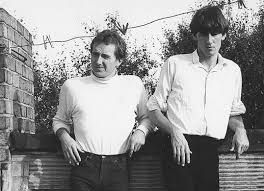
From the start, while he perhaps had never considered becoming a professional musician, McLennan was never going to take a ‘normal’ line of work, as he told Terry Gross on NPR in 2005; “I never considered the thought of having a regular job - it just wasn’t on my radar.” Brisbane, with that anti-art, ultra conservative culture at the time, left the two of them both keen to escape to something else. He also told her about his introduction to the bass, learning the simple notes to Forster’s Lee Remick, “it was like learning a foreign language, initially you’re kind of excited, but then the work starts.”
The pair of them moved to England, and then Scotland, recording new material and hanging out with the cool cats at Glasgow’s Postcard Records (where they befriended Edwyn Collins and his Orange Juice gang). Postcard put out the third single, I Need Two Heads.
Forster would later recall that “we were highly conceptual from the start because we didn’t have musical chops… We had lots of ideas - too many ideas.” McLennan started to develop his own writing style - it had been predominantly Forster’s work up to this point. While McLennan’s songs had the big riffs, there was a touch of melancholy, Forster would note, from the start - perhaps because his father died so young, or because the young McLennan was sent to boarding school at age twelve.
Go-Betweens: Lee Remick (audio only - you better like those ba ba ba's)
With the debut album, Send Me A Lullaby, coming out in November 1981, they now had a permanent drummer in Lindy Morrison. For this record, McLennan contributed four of his own songs, plus one he co-wrote with Forster. He would later tell Richard Kingsmill of Australian radio station Triple J, quite high-handedly (or perhaps with an arch touch), “why waste my time and insult my sensitivity and intelligence by having lazy or bad lyrics.”
McLennan explained to Lynden Barber in Melody Maker around that time, what the Go-Betweens was all about. “We’re doing something new and something very emotional, and we’re experimenting.” He was asked if they considered themselves to be a pop group, which of course garnered a not quite straight answer, “I think we are a pop group, but we’re the most unusual pop group there’s ever been. Although we work with melody, we sometimes work against it, and that’s like one of the cardinal sins of pop music.” Barber picked up on the fact that their songs generally had a lack of immediacy to them, taking time to settle with the listener, germinating slowly. They had, they said, “a gentleness of touch and sensitivity of approach that is unforced and quite natural.”
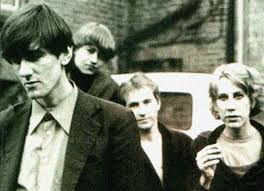
In 1983, friend of the band, Robert Vickers joined on bass, allowing McLennan to switch to guitar. With Amanda Brown joining in 1986, they expanded to a quintet for the first time, with her adding even more texture with her multi-instrumental talents, on violin, oboe and also adding some exquisite backing vocals. But more than that, she and McLennan quickly became romantically involved. The next change would be the departure of Vickers after 1987’s Tallulah, being replaced by John Willsteed.
Go-Betweens: Cattle and Cane (official music video)
In May 1986, during the promotion for Liberty Belle and the Black Diamond Express, Grant sat down with the legendary Irish broadcaster, Dave Fanning, for his RTE radio show. He gave some excellent glimpses into his background and growth as a songwriter. He recalled that despite, or possibly because of, the conservative stance of the state government in Queensland when they started out (getting police to break up gigs was a common thing), the music scene in Brisbane was perhaps the best it had ever been.
The alternative scene was perhaps a few hundred strong in the city, but they even found themselves on the fringes of that; they were listening to mid-60s Bob Dylan, Talking Heads, Patti Smith and the like, while the other bands were into The Clash and The Stooges. He talked of how others listened and replicated sounds to show the influences they had, whereas he was more interested in the feeling and the ambience of the music.
Looking back on his younger days, growing up around Queensland, McLennan felt that the state was so vast, and yet there was Brisbane and then everything else. He spent a lot of time growing up near the sugar cane fields, and other times close to the coast, but wasn’t really in urban settings until he arrived at university.
Go-Betweens: Apology Accepted (live on The Whistle Test, 1986)
As a child, they didn’t have a radio, but he did see the TV, so in 1966, his absolute musical love was The Monkees, “Davy Jones was the most beautiful thing.” He got laughed at on arrival at boarding school for having such childish musical tastes, the other kids were already into Led Zeppelin. It wasn’t until 1972, when he discovered David Bowie and the single Starman, that more musical windows opened up for him.
But that upbringing and losing his father at such a young age, clearly impacted him, his outlook and how he approached music. “Our family was ruled by very strong women… most of my references were determined by the way my aunts, my mother, my grandmother, saw things.”
There was also clearly frustration with record labels by this point in his career; the Go-Betweens had already been through seven labels for the four albums they had released to that point. The labels couldn’t market us, he said, “I simply don’t care. All I hope is, that in the morning, when I look in the mirror and think that I didn’t embarrass myself last night, or prostitute myself. That’s all I want to be able to say.” Fanning pointed out how great a record Spring Hill Fair was, that it was just perfect and how absurd it was that Seymour Stein (Sire Records) felt that there wasn’t enough on it for him to be able to release it in the States. McLennan agreed, that was crazy as Sire had already signed Aztec Camera, The Smiths and the Bunnymen for the USA market, and that if he couldn’t see that Part Company and Bachelor Kisses should have been marketable, then there was something wrong.
Lovers Lane burns down
Things were getting increasingly hard, financially speaking, as the decade went on. All of the years taking record label advances and the like, without capturing the commercial gains they undoubtedly deserved, was starting to catch up with them. An example being on the 1989 European tour they did supporting R.E.M. on their Green tour; five weeks around Europe, and it ended up costing them around £35,000 of their own money.
Go-Betweens: Streets Of Your Town (official music video)
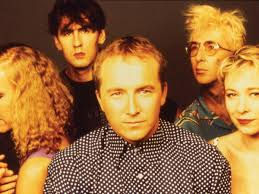
After the record that many consider to be their masterpiece, 16 Lovers Lane, and its subsequent tour in . Forster and McLennan, perhaps with those financial hardships at the back of their minds, decided that it was time to move on to solo projects and finish the band. The news did not go down with Morrison and Brown, it precipitated a pretty much instantaneous end to his personal relationship with Brown too.
Musically, McLennan teamed up with The Church’s Steve Kilbey to form Jack Frost. They would work together from time to time, and put out two LPs, a self-titled one in 1991, and 1995’s Snow Job.
Jack Frost: Thought That I Was Over You (official music video)
He also got down to working on his own material too. First up came Watershed, also in 1991, which he released under his full name, Grant W. McLennan. Norm Elrod writing in AllMusic described him as “a truly exceptional artist who, in the spirit of Lloyd Cole, crafts moments of brilliance to fit his limitations.”
Grant McLennan: Easy Come Easy Go (official music video)
1992 saw the release of Fireboy, and 1995 Horsebreaker Star (recorded in Athens, Georgia), which noted critic Robert Christgau (Village Voice) said was, “unrolling tune after sweet, simple-seeming tune.”
Grant McLennan: Simone and Perry (official music video)
Reformation
As the 1990s went on, Forster and McLennan found themselves working together more often. Eventually they decided to get the band back together, but with bridges either burned, or the feeling it was time for some new associates, this time they were joined by Glenn Thompson and Adele Pickvance. Together they would forge three more well received records; The Friends of Rachel Worth (2000), Bright Yellow Bright Orange (2003) and Oceans Apart (2005), with some saying that the latter album was on a par with 16 Lovers Lane. It would gain them their one and only ARIA award, for Best Adult Contemporary Album, and get more critical praise heaped upon them. The Guardian wrote that it had, “the air of two lavishly talented writers on rare form, confidently challenging each other to greater heights, is inescapable.”
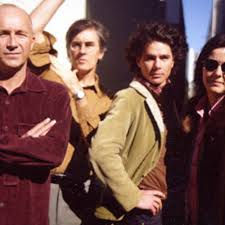
With fresh faces in the band, what did it mean to join a band like theirs? McLennan gave his thoughts on this matter to Scram magazine in 2001. “Well, you’ve got to be a Go-Between, whatever that means to you. It means something different to me. It’s almost impossible to explain… This is a very precious gang. Anyone can join, but you have to fit the criteria. You could be a little bit weird - you know what I’m saying?”
Go-Betweens: Going Blind (live on Later With Jools, 2000)
Bye Bye Grant
On 6 May 2006, Grant and his fiancee Emma Pursey had been preparing for a house party at the Brisbane home. He went upstairs for a rest and a nap - and he never came back down. He had died of a heart attack, although his addictive personality, which had seen him become very friendly with the bottle and various other substances over the years, had almost certainly played its part. He was forty-eight years old.
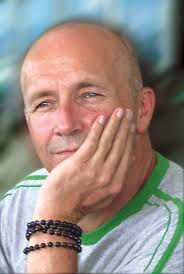
Robert Vickers first met him in the late 70s, before moving to New York City. McLennan came and spent a month visiting him there in the early 80s, crashing at his apartment. He would get the call to join up with the band soon after that, and he remembered that because McLennan had played the bass like a guitar, “really more like orchestration”, it set a high standard that Vickers had to follow in future records.
Writing after his death, Vickers recalled that his approach to the guitar was also interesting, not using sounds but melodies, “he wrote songs within songs.” But it was his overall knack for songwriting that Vickers remembered best, “he had an endless supply of killer hooks circulating in his head and could at any time glue one to a phrase in just the right way to make it unforgettable.” The songs, he noted, seemed to arrive already fully formed.
“He was as close to brother as I had… we grew up together in many ways… I forgave his foibles and he forgave mine… It’s hard to imagine that anything could kill him but I wasn’t surprised to hear of his death.”
He wrote the melodic ones in the band, full of deft lyrics and a 1960s pop sensibility. His songwriting talent was immortalised forever, when the Australian Performing Rights Association put his 1983 autobiographical single, Cattle and Cane in their Top 30 Australian songs of all time. Edwyn Collins agreed, when reviewing it for Melody Maker, he called it, "a monumental record... I think the Go-Betweens are the most perceptive writers since Blonde on Blonde era Bob Dylan."
And even if there had been nothing much else but that to his credit, he gave us Bye Bye Pride, one of the great under-appreciated pop songs of the 1980s. Pretty close to perfection in my eyes...


Comments